The Foundation That Grows With You: A Story from 2026 to 2100
Florian Berger · Sep 25, 2026
Topic: Machine-readable website
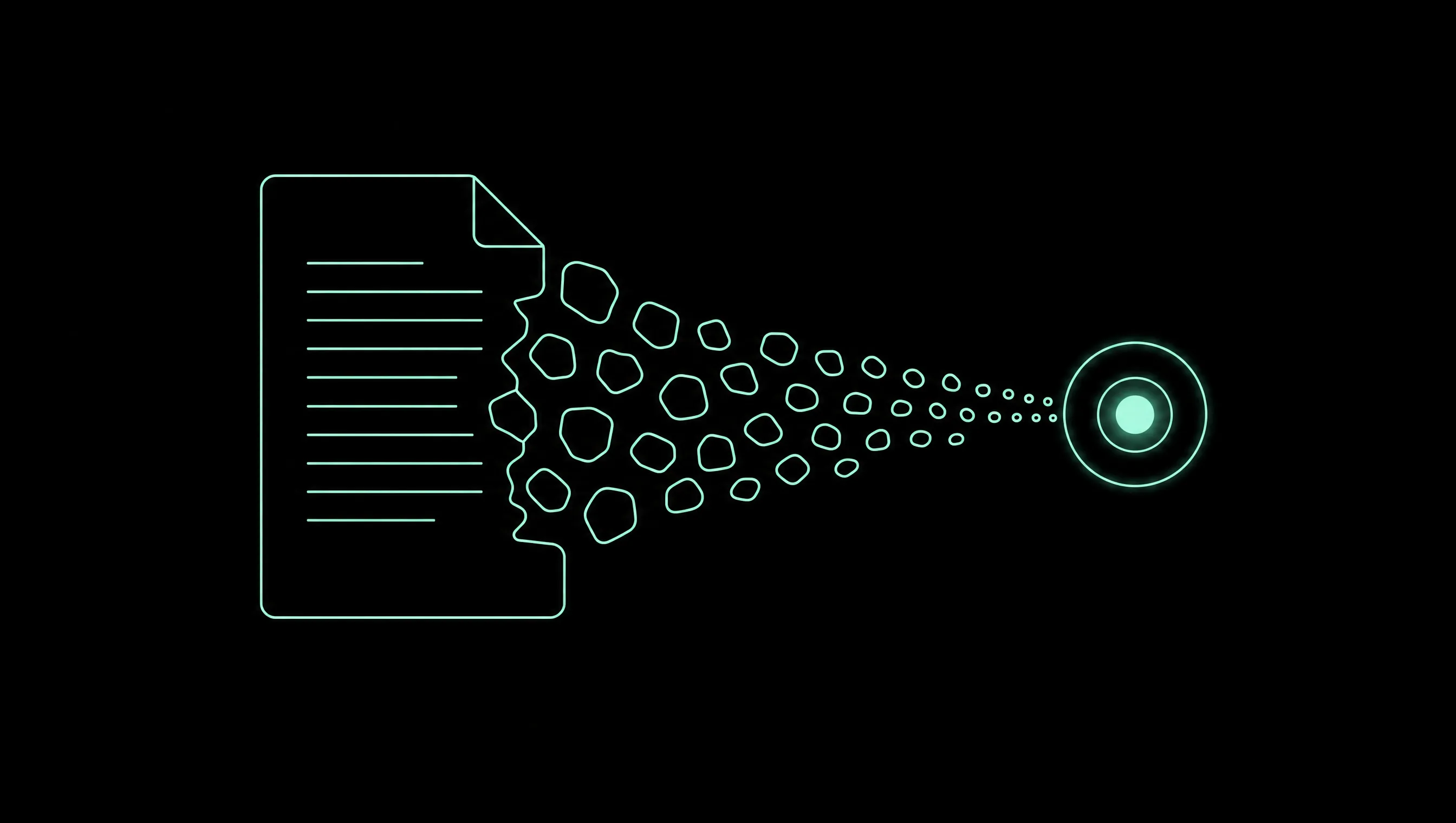
There is a sentence that carries a whole business. Ours goes: “We're open Monday to Friday, 8 am to 6 pm.” This story follows that one sentence — and the foundation that keeps it alive — through 75 years.
A note before we set off: the first stops of this story are near and plausible. The further we go, the more it becomes vision rather than forecast — deliberately. No one knows what the web looks like in 2100. But a foundation built only for today is already a museum tomorrow. So it's worth thinking out loud.
2026 — The sentence gets a home
The sentence existed in three versions on the website so far: once on the home page, once on the contact page, once — worded slightly differently, without the second “to” — in the footer. When the business switches to Saturday opening in the summer, someone changes the home page. The footer stays as it was. A customer calls on a Saturday. No one answers.
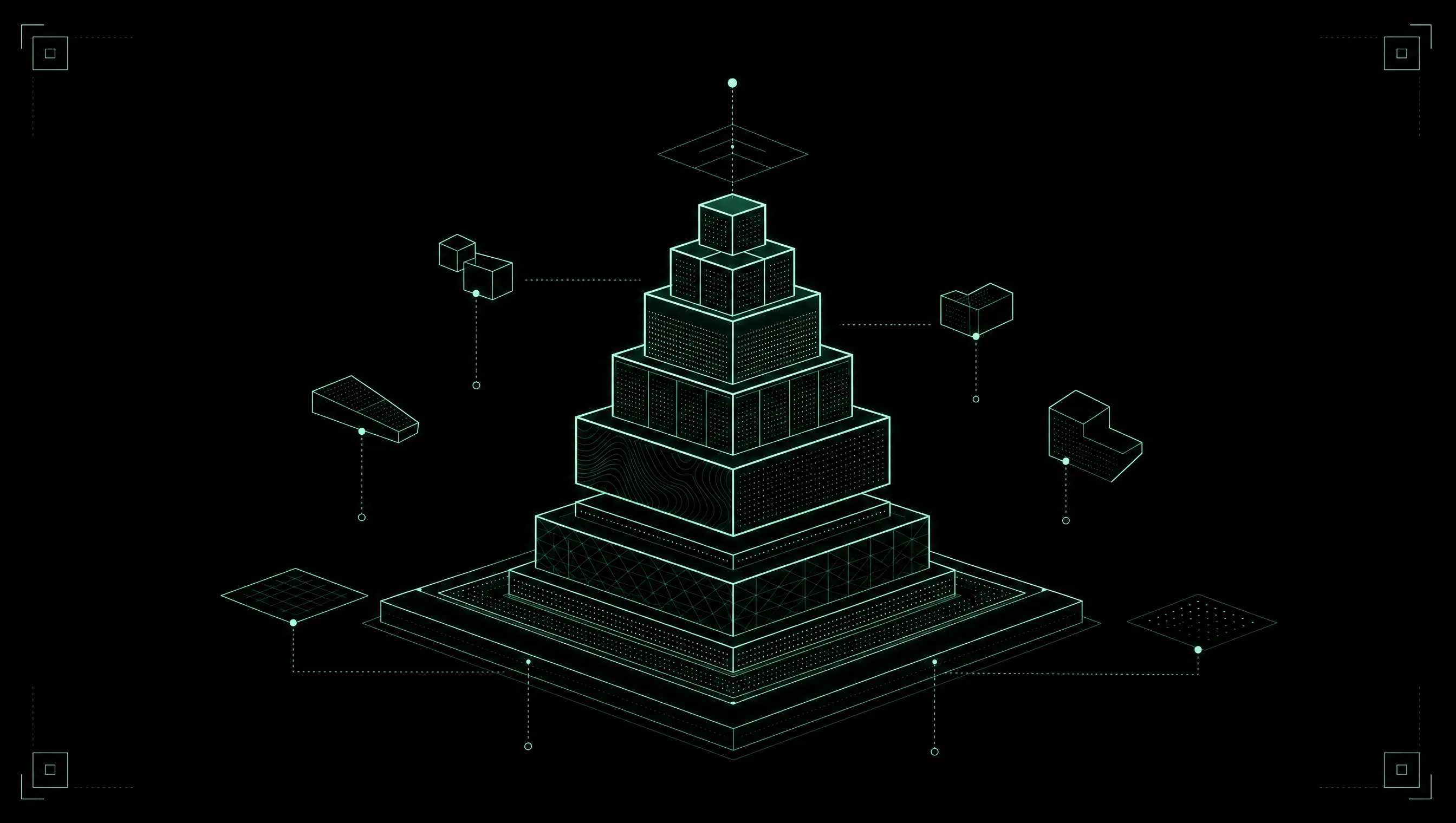
This year btlabs Core is born — and from here on it accompanies this story. The basic idea is unspectacular and effective precisely for that reason: composable, built modularly, with AI as an assistant rather than a replacement. The opening sentence moves into a single, structured data base. From there it feeds the website and is available in machine-readable form to search engines, AI assistants and other channels. You still assemble the building blocks yourself, decide the structure; the AI helps with writing, translating, checking. The foundation is laid, in the year everything begins.
2027 — The sentence gets an assignment
A year later you've stopped doing every step yourself. You no longer prescribe the steps, but the goal: “More inquiries from the region, without blowing the budget.” Autonomous agents do the rest — they test layouts against each other, adjust wording, shift budget to where it works.
The opening sentence itself doesn't change. But how it's presented changes constantly and automatically — sometimes prominent in the hero area, sometimes discreet in the footer, depending on what's working right now. Your role is no longer editor, but client: set goals, set limits, check the result.
2030 — The sentence no longer needs a screen
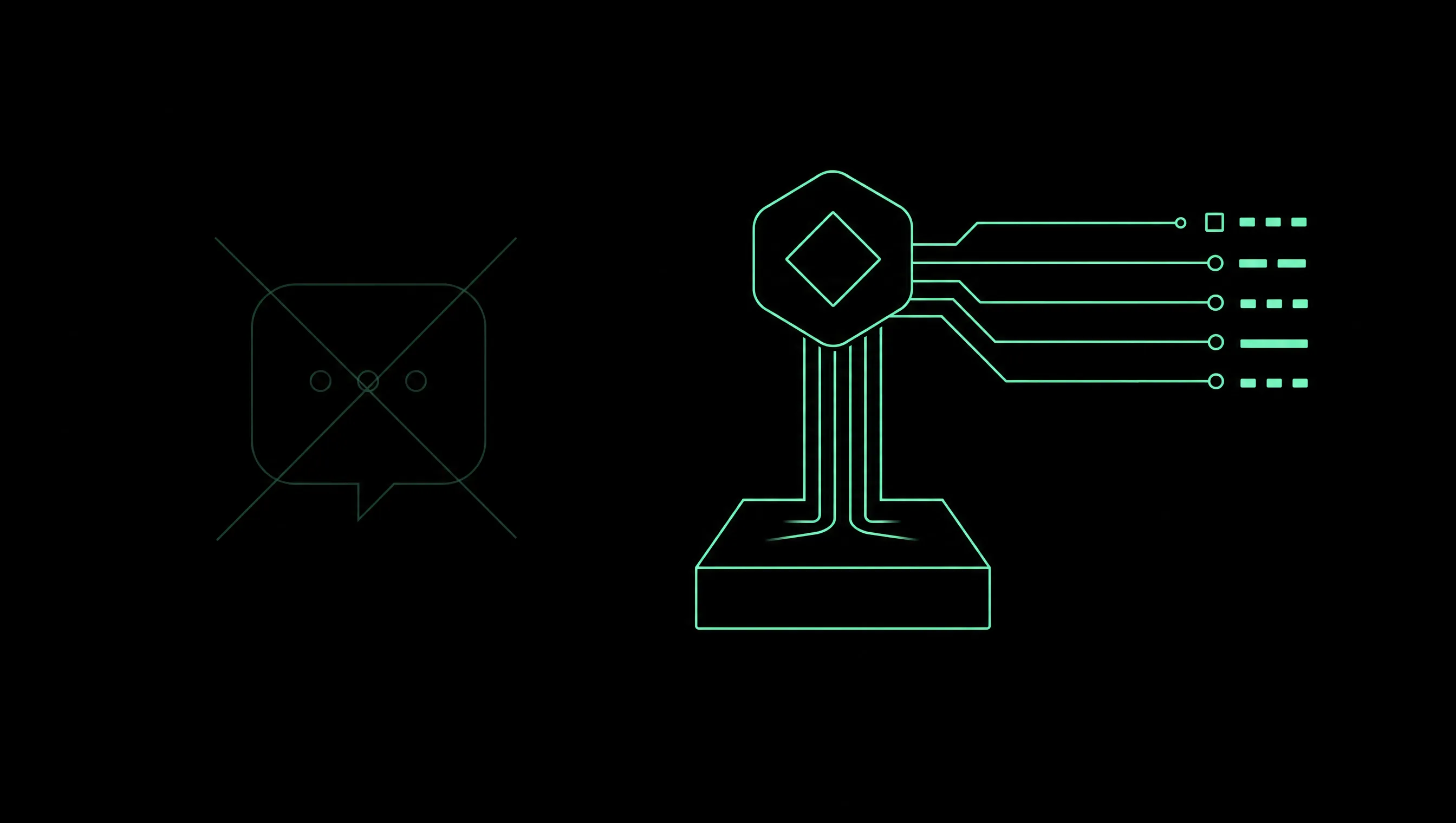
No one types “opening hours company XY” into a search box anymore. You ask out loud, in the car, in the kitchen, on the go — and the room answers. Zero-UI: the interface disappears, the content remains. Smart environments update themselves, without anyone “publishing” a page.
Your role shrinks to the essential: the last line of control for exceptions. A holiday, an emergency, a spontaneous closure — that's the moment a human still steps in. Everything normal runs by itself, because the sentence was cleanly anchored from the start.
2035 — The sentence gets a place in space
Websites in the flat, two-dimensional sense begin to fade. The Spatial Web distributes information in three-dimensional, mixed space — holography instead of a flat page. The opening sentence is no longer a line of text, but an object: a glowing symbol above the entrance, visible to anyone passing the business with their augmented reality, placed at exactly the right coordinate, with real spatial physics.
Your task becomes that of a curator in space: where do I place what, in which of the many simultaneously existing realities? The foundation still delivers the one truth behind it all — only the stage is now space itself.
2040 — The sentence loses its form
Formats like “text”, “image” or “hologram” begin to seem like artificial categories. What counts is the pure information core: open, Monday to Friday, 8 am to 6 pm. Whether this core arrives as a reassuring voice, a terse note or a detailed explanation is no longer decided by the business — but by the state of the person asking. Pulse, stress, tone of voice: the system reads them and adjusts the tone and length of the answer before it's spoken.
Your role is reduced to the purest thing a business can deliver: the formless, true core of the statement. Everything else — how it arrives, to whom, in which moment — is handled by the foundation.
2045 — The sentence gains temperature
Information is no longer only visible or audible. World Engines create entire experienceable environments around a statement — with touch, smell, temperature. The opening sentence of a cozy restaurant may become tangible: a hint of warmth, a breath of the kitchen's aroma, at the moment someone asks whether it's open. Autonomous AI actors populate these spaces and answer questions in the business's interest, without a human ever intervening.
You've long since stopped being an editor, and become an architect of parameters and narrative guardrails: what may this space let people feel, and what not? Where does the experience you design end, and where does manipulation begin? Drawing that line becomes the real entrepreneurial task.
2050 — The sentence arises in thought
The last threshold of this story falls between thinking and creating. Neural interfaces allow content to be formed directly from thought — no more typing, speaking, designing in the classic sense. And the statement itself reaches the asker no longer as image or sound, but as a direct sensory stream that acts almost like one's own memory: I've been there before, it was Monday, it was open.
What remains of our simple sentence from 2026 at this point is no longer its form — that has shed its skin seven times. What remains is only its truth: that it comes, reliable, current and authorized, from a single source that belongs to the business itself. Everything else was replaceable. This was not.
2100 — The sentence, when no one asks anymore
Here we leave every serious line and allow ourselves to dream freely. Perhaps in 2100 no one asks anything anymore. Perhaps the systems surrounding people have long known when a place is open, before the thought of asking even arises — as naturally as today no one wonders whether there's light in the room when they flip the switch.
Perhaps “website” will then be a word like “stagecoach” — understandable, but from another era. What should remain is the core behind the word: that a business, a person, an idea leaves a true, current, self-determined footprint in the world of information. The form will have changed a dozen times. The need to be found truthfully will not.
What this means for today
This story is not a roadmap. We don't know whether holograms will really float above shop doors in 2035, or whether thoughts will really become content in 2050. What we take from this exercise is something more sober — and therefore more useful:
Every stop of this story — from the modular system through autonomous agents, Zero-UI, space, the pulse, the environment to thought itself — radically changes how a business's truth arrives. Not a single stop changes that it must first be anchored in a single, clean place that belongs to the business itself. A business that doesn't have that in 2026 can't simply retrofit it in 2035 — it builds on sand, no matter how impressive the next surface looks. If your business is still standing on foundations that shaky today, Website migration shows the cleanest way to catch up — while protecting the visibility you already have as well as possible.
That's exactly the idea btlabs Core begins with in 2026: not the bet on a single future technology, but the foundation on which every coming — and today still unimaginable — technology can build, without a business starting from scratch at every change. Composable today, Zero-UI tomorrow, perhaps thoughts the day after. The foundation built right today doesn't have to be rebuilt with every change. It grows with you. I've described what a technical foundation like that actually looks like in From SEO to GEO.
The sentence “We're open Monday to Friday, 8 am to 6 pm” is banal. That's exactly why it's the best example: if even the simplest sentence of a business is to carry through 75 years of radical change, that doesn't begin with the next technology. It begins with anchoring it today in a single, right place.
If you're curious what a foundation like that could look like for your business — get in touch, we're happy to think it through with you.
Frequently asked questions.
What is btlabs Core, exactly?
btlabs Core is the platform we build websites on: fast, trilingual, free of cookie banners — and with your data in your hands.
The difference from a website builder lies underneath. Your content does not exist as finished pages but as structured data. From that the website for people is generated, and the same source answers the questions of search engines and AI assistants. One place to maintain, many channels.
btlabs Core is developed by Berger+Team, a freelancer collective in South Tyrol.
Do I need to rebuild my website for AI visibility?
Not necessarily. Structured data, clean multilingualism and performance can be retrofitted. But if the foundation is an old tower of plugins, a foundation that brings these things built in is often the faster and cheaper way.