From the Island Zoo to One Source of Truth: An Example Path
Berger+Team · Oct 7, 2026
Topic: AI & automation
How does a business actually get from the island zoo to one source of truth — without overturning everything at once? Anyone who senses that their scattered tools create more friction than benefit asks themselves this. This article shows one possible path with an invented but realistic example. No magic recipe — a picture of what it could look like for you.
The starting point: the island zoo
Take a small service business — say, a studio with three employees. The digital landscape has grown over the years: a website with one provider, the booking tool with the next, the newsletter somewhere else, the customer list in a spreadsheet, the invoices in a program of their own. Five tools, five logins, no connection.
The pain doesn't show as a catastrophe, but as daily friction: a changed opening time is still wrong in three places after two weeks. A customer asks about her last booking — the answer takes ten minutes of searching. No one knows exactly which channel brings the most inquiries.
Stage 1: lay the foundation
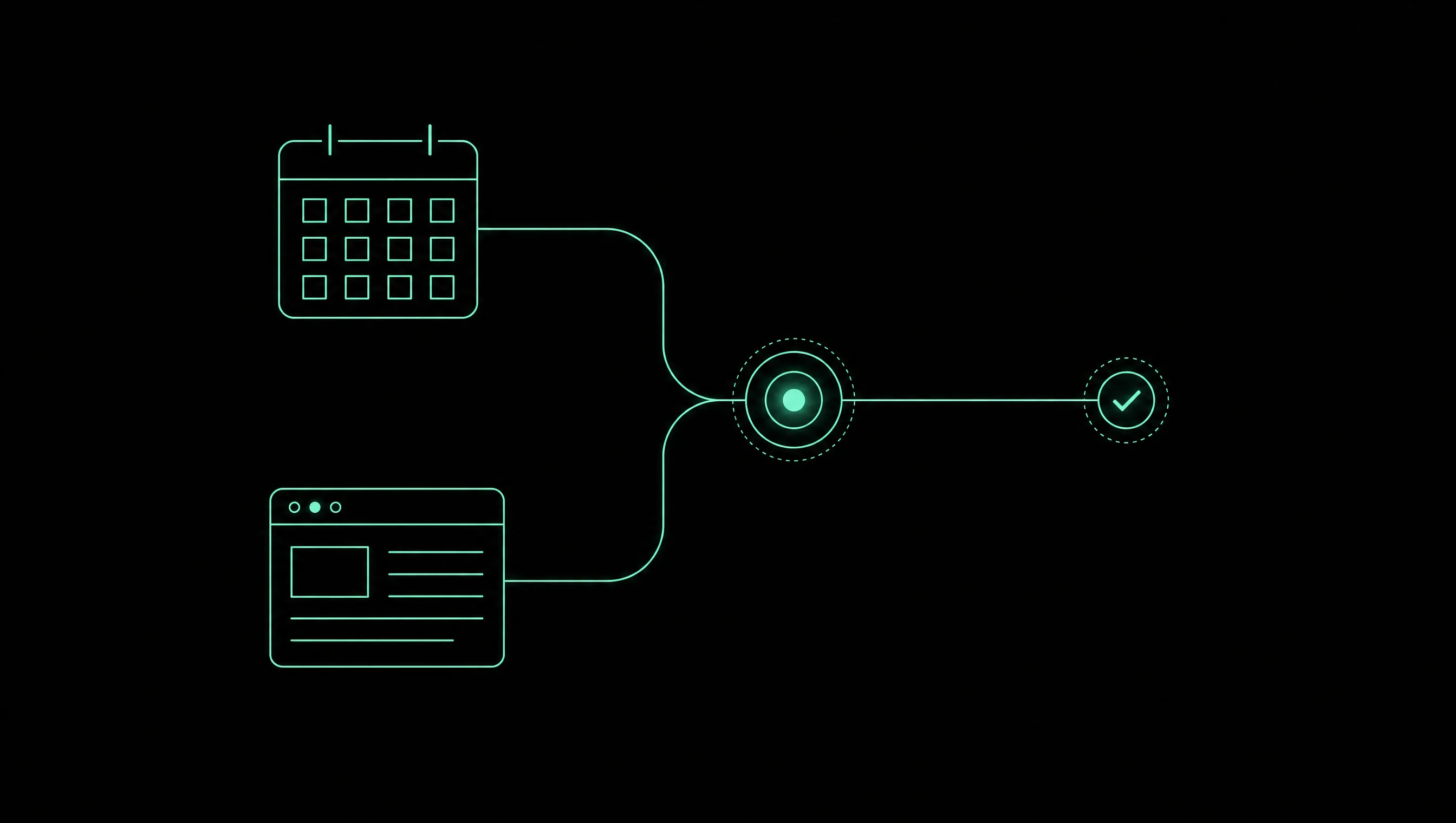
The first step is to create a single base where the core data finally has a home: services, prices, opening hours, location, the most important customer information. The first step isn't to throw everything away. This base becomes the new source of truth (SSoT) — even before a single old tool is switched off.
From now on a simple rule applies: new or changed core data is only maintained here. The sprawl isn't stormed, but cut off from its food.
Stage 2: connect channels instead of maintaining twice
Now the data flows from the foundation to where it's needed — onto the website, into the machine-readable versions for search engines and AI, into the channels that pull from it. What used to be typed separately in every place is now maintained once and automatically up to date wherever it comes from the foundation.
The effect is immediately tangible: the changed opening time is correct with one move wherever it comes from the foundation. The contradictions that used to cost customers disappear — not because someone is paying attention, but because there's only one version.
Stage 3: dismantle the islands
Only now, when the foundation holds and the channels are supplied, are the old island tools replaced one after another. Not in one big overnight action, but one at a time — always when its task has been cleanly taken over by the foundation. Every switched-off island saves a subscription, a login and a source of error from that moment on.
What this example shows
Consolidation isn't a leap, but a path in stages — and every stage pays off immediately, not only at the end. You don't have to rebuild everything first to gain something: the foundation alone already takes friction out. The rest follows at the pace that suits your business. This could look like this for you too.
Why this path pays off at all — and what doing nothing costs every month — is in the article on the hidden costs of tool sprawl.
Frequently asked questions.
We already have a site — is migration possible?
Yes. We migrate the content and set up a 301 redirect for every old address, so Google recognizes the move. All about it: Website migration.
Isn't a drag-and-drop site builder cheaper?
In the short term, yes, no question. But over time you pay a subscription that grows with every new feature, and you stay technically locked into the provider — switching means rebuilding almost everything from scratch. Core, by contrast, is a one-time investment: you pay for the build, not for using your own website.
Can I really maintain content myself?
Yes. Block system with live preview — texts, images, whole pages without code, with draft/published status. And if you like: straight from your chat or AI system (MCP).