The last ten centimetres
Berger+Team · Sep 20, 2026
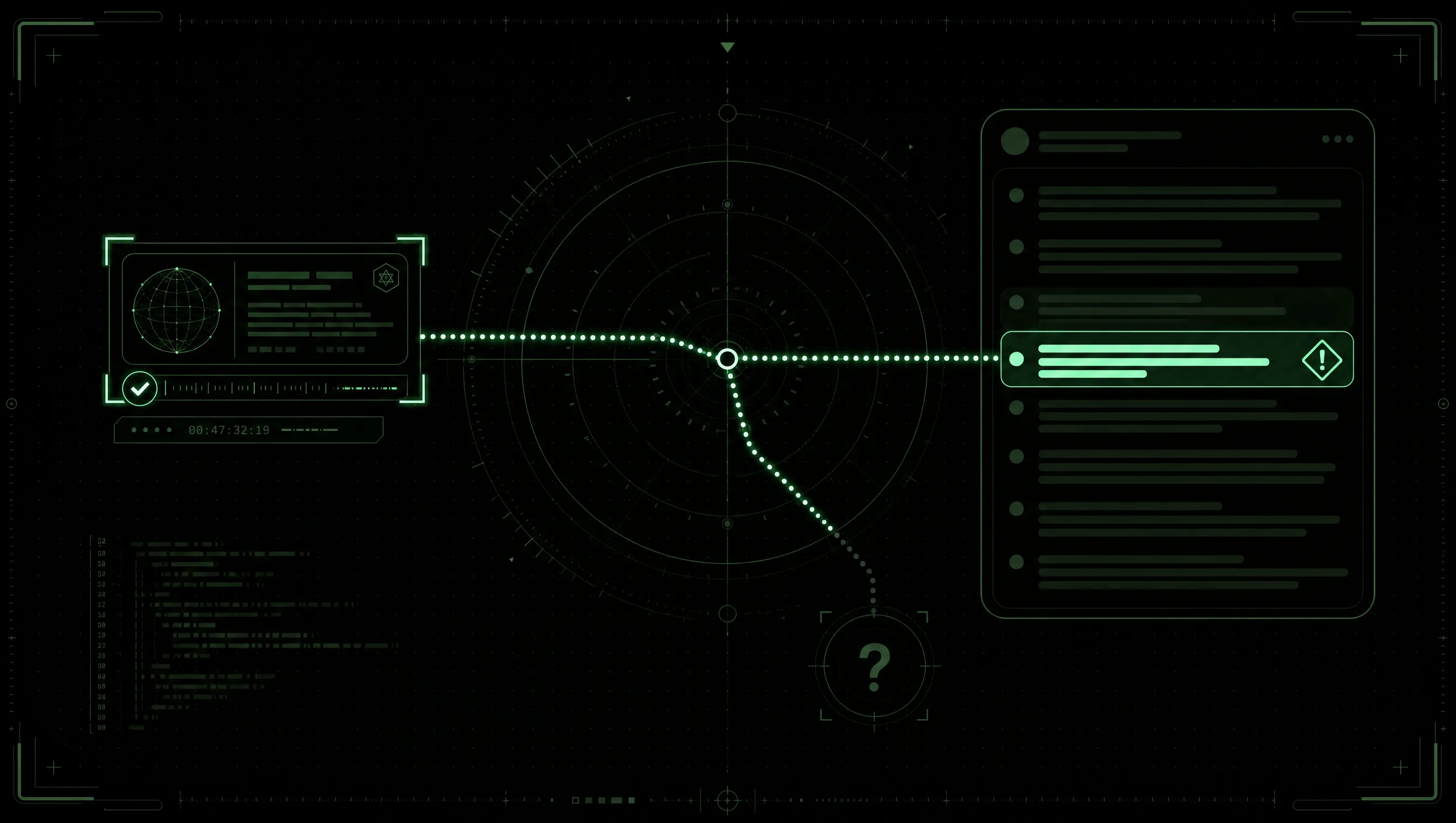
Picture someone recommending you. Not a person — a machine, comparing three businesses for a customer right now. It has found you, it thinks you fit, it wants to put you forward.
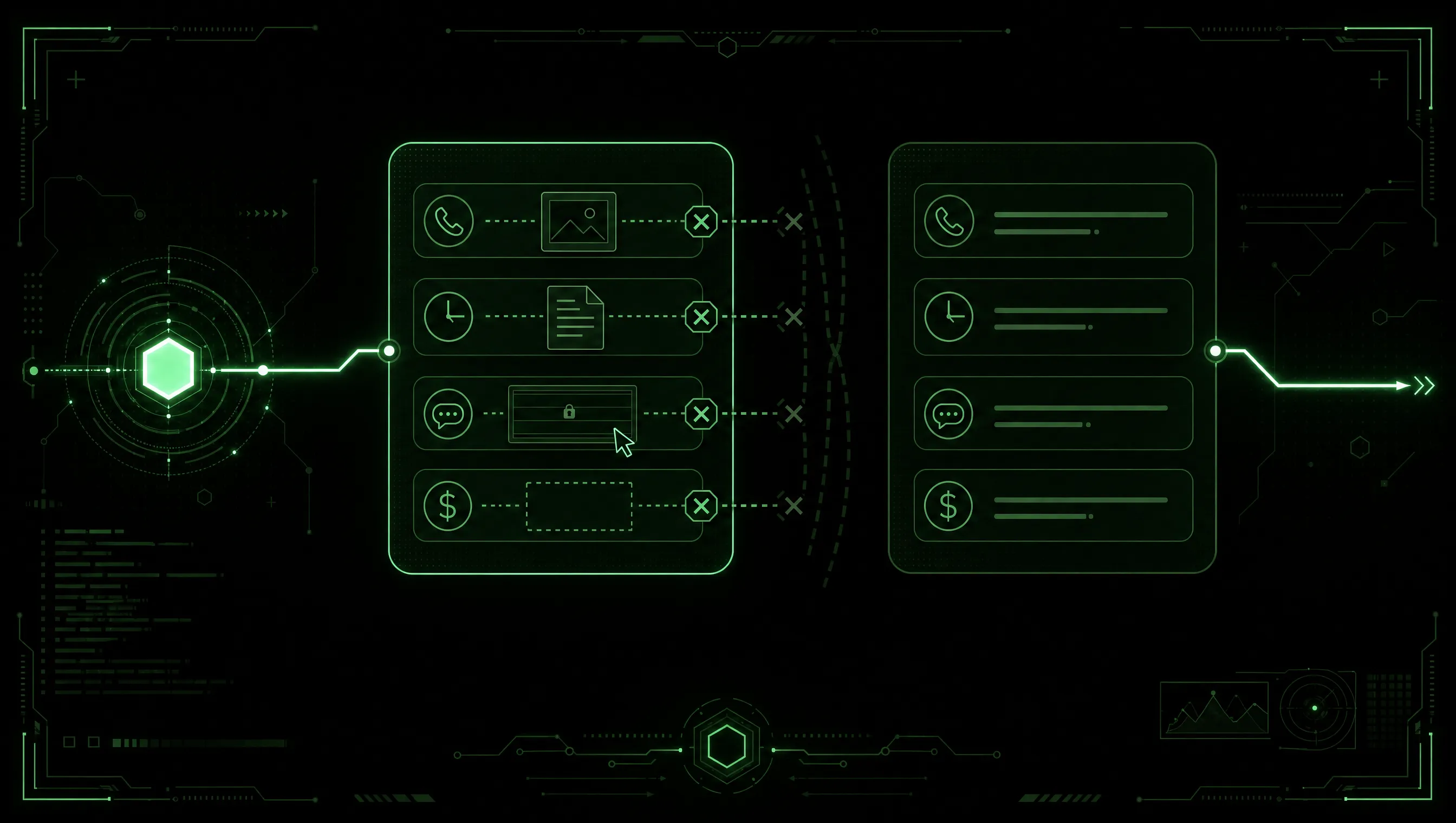
Then it reaches your site and finds: a phone number built in as an image. Opening hours inside a PDF. A form that only appears after a click on “Contact”. And under every service the line “price on request”.
It can pass none of that on. Not because it is not allowed to — because it cannot read it.
The stretch where it breaks down.
Visibility is the long part of the journey, and everyone writes about it. The last ten centimetres are the short part: from “I have found the business” to “I can do something with it”. That is where most paths break off, at four places, all of them fixable.
The number as an image. A popular trick against spam harvesters: put phone and email in as graphics so no program can read them. It works — it just hits the wrong parties now. Automated harvesters have long since got at that data. The assistant that wants to give a customer your number has not.
The opening hours in a PDF. A document is made for people who download and look at it. To a machine it is an attachment without structure. What sits in a PDF effectively does not sit on the website — unless the same detail also appears as data on the page.
The contact behind a click. If the form only appears after someone has clicked something, it does not exist for many automated visitors. They see the page as it is delivered, not as it behaves after three clicks.
“Price on request”. The hardest point, because it is usually a deliberate decision — and often a good one. But to a machine comparing three businesses it is an empty field. Anyone who finds a range at two suppliers and nothing at the third names the two.
The fix is not “publish all prices”. It is: something solid instead of nothing. A range. A starting price. An hourly rate. A flat rate for the most common job. Whatever gets said first on the phone anyway can also stand on the page.
How to tell whether this affects you.
The test takes five minutes and needs no tools:
- Select your phone number on the website with the mouse. Can it be selected and copied? If not, it is an image.
- Look for your opening hours. Are they text on a page — or only in a document, an image, an embedded map?
- Look at a service page. Is there any number at all? A duration, a range, a starting price, an area served?
- Count the clicks to contact. More than one is one too many.
Anyone happy with all four has the last ten centimetres under control. In our experience, that is the minority.
Why this is not a detail.
The uncomfortable part: these four things cost nothing and still get in the way almost everywhere. They are not an investment decision, they are leftovers of old habits — from a time when only people came to websites and a PDF was a good idea.
And they take effect precisely when everything else has worked. The business is findable, the machine picked it, the customer would have called. What failed is the last step, the one nobody measures — because it leaves no trace. An unspoken recommendation looks like nothing at all.
What happens after the enquiry — how an AI visitor becomes a customer — is in From AI visitor to customer. This piece ends where that one begins. And if you want to know whether anyone arrives at all: the visibility cockpit shows the stretch before it.
The one thing to take away.
A machine that wants to recommend you needs three things in machine-readable form: how to reach you, when to reach you, and roughly what it costs. If one of them is missing, it recommends someone else — not out of malice, but because it can do nothing with what it has.